Stokvel savings
Multi-branch retail
Customer funds
Dozens of stores
In production since July 2026
A stokvel savings platform built for the counter.
The system behind a South African retail chain's stokvel savings programme: a member app, a head office console and hundreds of points of sale, on one platform. For a group serving middle to lower LSM customers from a distributed branch network in urban and rural locations.
Published 16 September 2026. Every figure on this page is measured in the production system, read only, on 16 September 2026, over the 61 trading days since go live. Client volumes are given as orders of magnitude.
In production
Measured, not estimated
Tens of millions
Member savings held
Tens of thousands of funded accounts
Tens of thousands
Members on the platform
The entire base migrated in a single day
Nine figures
Moved across the counter
Since go-live
0
Failed transactions, all-time
Every record completed
99.999%
Availability, measured
Over 61 trading days
Hundreds
Points of sale
Across dozens of stores, all in active use
Figures exclude the one day legacy migration and pre-launch load testing, so they reflect member activity only.
The situation
Where the work got stuck
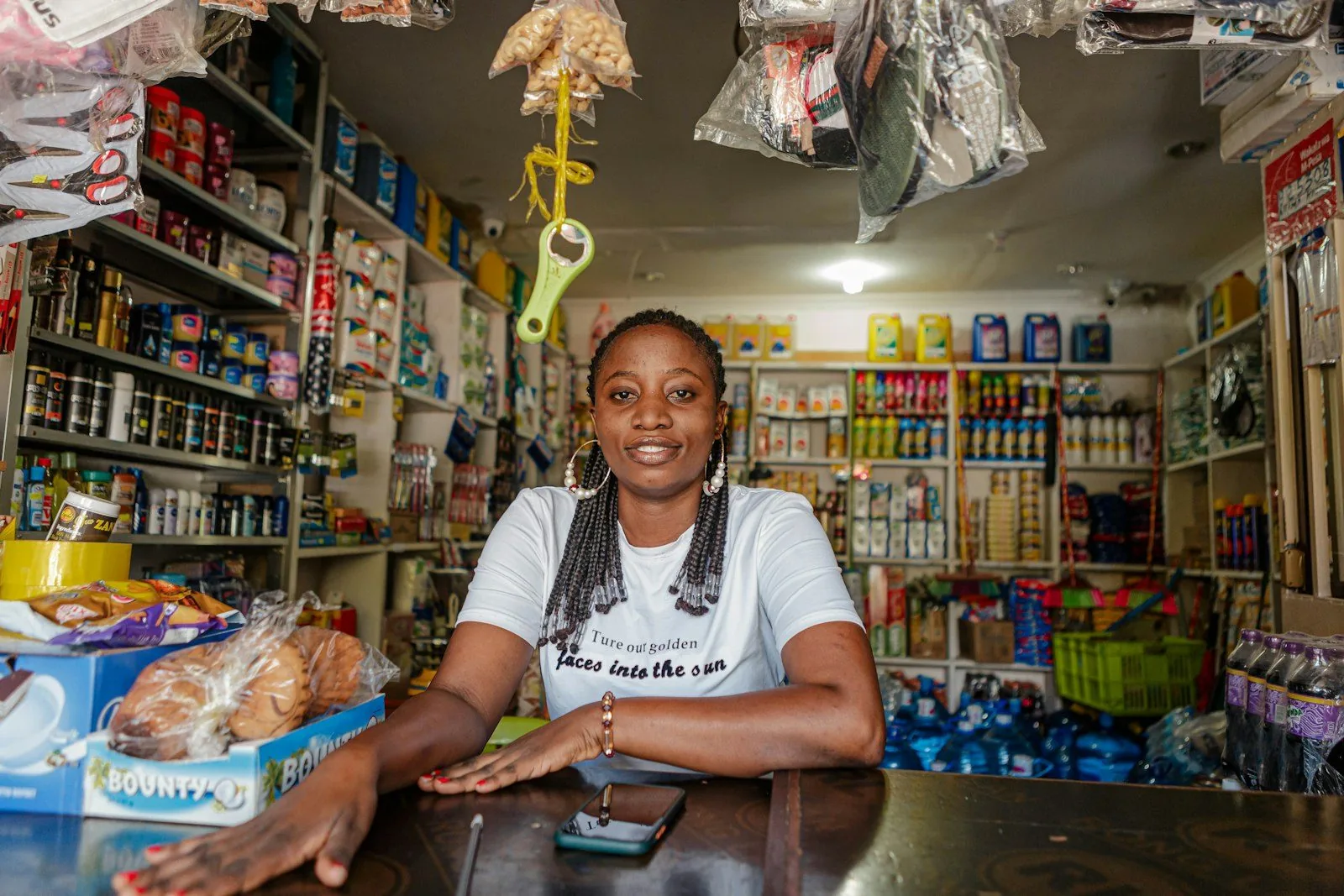
Members save through the year at the counter, so the money has to be provably theirs: recorded the instant it is taken, spendable in any branch, and reconcilable to the cent. The branch link is unreliable and the head office reporting system sits on on-premise servers that the cloud cannot always reach.
What it had to survive
Built for the conditions it runs in
Controls
Every action writes to an audit trail that cannot be edited, 1.1 million events so far. Every redemption is approved by the member with a one-time PIN, and sensitive changes go to head office for a second person to approve or reject.
Conditions
In-store links drop. Every transaction commits to a highly available service in Cape Town in about a tenth of a second, so the point of sale talks to the cloud rather than to a fragile box on site. Over the 61 trading days measured, no transaction on the money path failed.
People
Branch staff on shared devices, savings groups with a chairperson, a treasurer and a secretary the system requires before a group goes active, and head office running members, groups, roles, approvals and reporting from one console.
Inside the console
The console head office runs the business on
Members, stores and reports, with the signed-in role shown at the top of every screen.
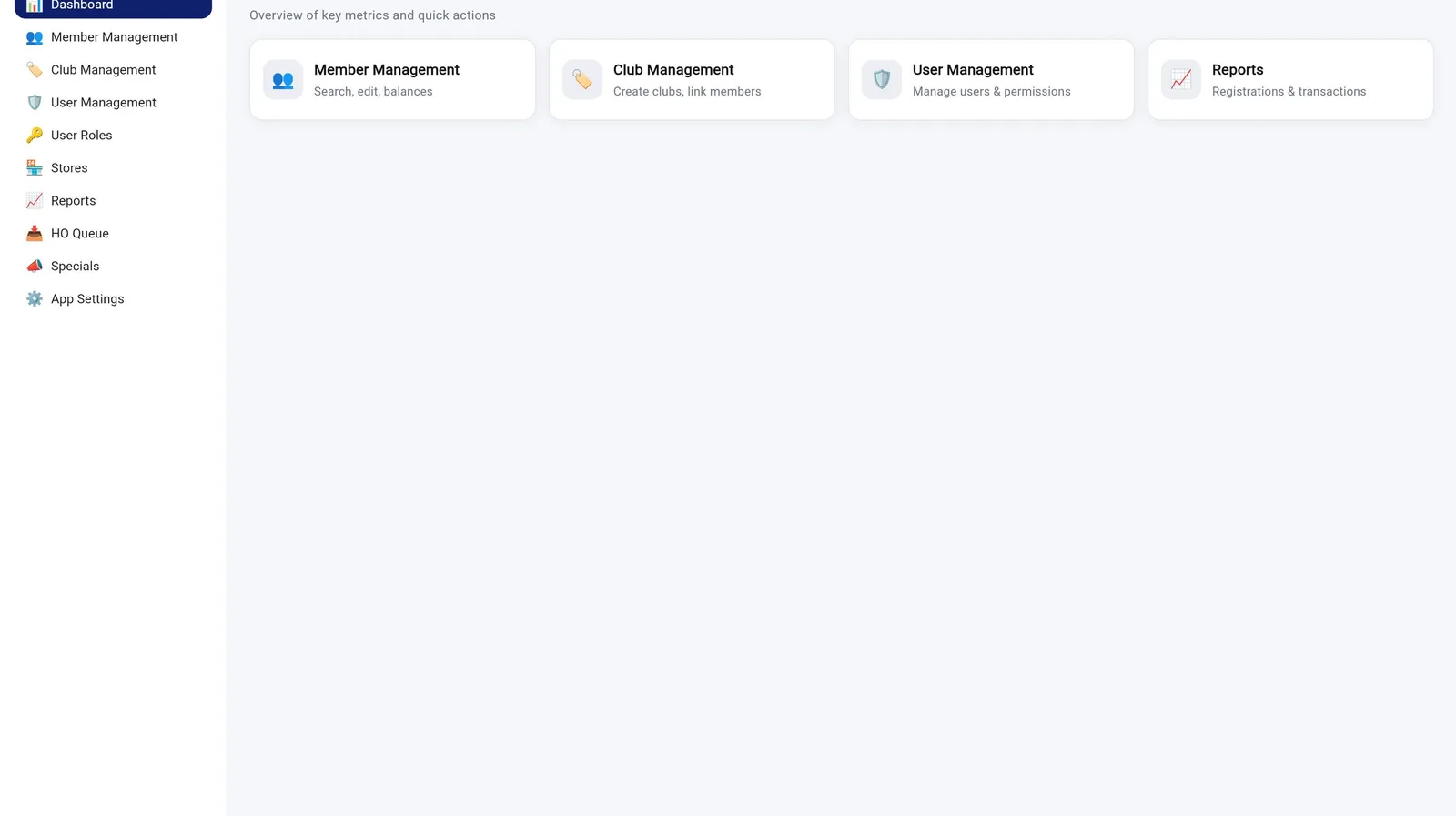
Dashboard: quick access to members, clubs, users and reports
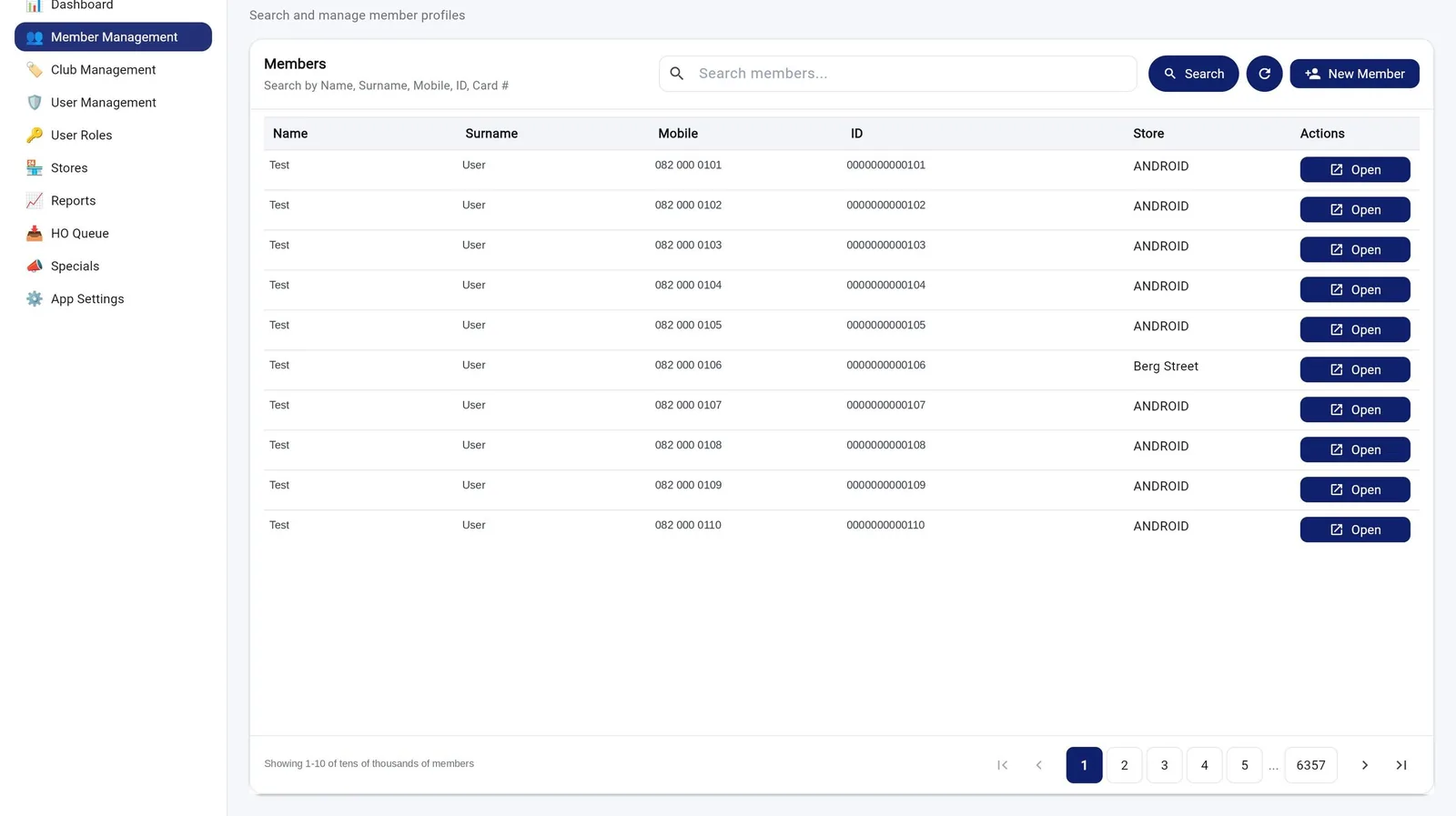
Members: search by name, mobile, ID or card number, across tens of thousands of records
What we built
One process, from the branch counter to head office
Speed at the counter
The endpoints that touch a member's money
Measured over 61 trading days. A card check is done in the time it takes a cashier to look up.
Why nothing is lost when a branch goes offline: the money is recorded the instant the point of sale commits, in region, and every transaction written so far carries a completed status. The on-premise mirror catches up on its own schedule, so a broken link delays a report, never a member's balance.
How it runs today
In production, in every branch
Three applications on one platform: a member app for balances, history, cards and groups; a head office console covering ten working areas from members and KYC to stores, reports and the approvals queue; and the point of sale service that hundreds of devices run on. About 167 000 lines of code across three codebases, 30 backend domains and 37 infrastructure stacks, all in region in Cape Town.
Tens of thousands
Sign-ins at the counter
Thousands on the busiest day
1.2m+
Server calls
One error, no throttling
500K+
Changes mirrored on site
None lost at source
7:00 to 17:00
Trading window
Peaks 11am to 1pm
Results
What changed
Millions
Net saved by members
Since go-live
Tens of millions
Legacy balances migrated
Reconciled to the cent, same-day trading resumed
90%
Lower cost to run
Than the system it replaced, nothing broken
R0.04
Cost per transaction
A fraction of what it replaced, all in
The platform costs a small fraction of the system it replaced to run, while holding tens of millions in member savings. The design is pay per use, so the bill tracks real usage: the busiest day so far used a fraction of one percent of what is provisioned.
Stack
Method. All figures pulled read only from the production account in Cape Town on 16 September 2026, at daily resolution. Transaction and response figures cover the 61 trading days since go live, from 13 July to 16 September 2026, and exclude the one day legacy migration and pre-launch load testing. Availability and response times come from the platform's own monitoring. Client volumes are reported as orders of magnitude rather than exact values.
Questions
Stokvel savings platforms, answered
Who builds stokvel savings platforms in South Africa?
Synchrotech, a software engineering company in Cape Town, built and runs this stokvel savings platform for a South African retail group with dozens of stores. Members save at the counter through the year; every deposit and PIN-secured redemption lands on one ledger that head office reports on, and the platform has run with zero failed transactions since go-live.
How does a stokvel savings platform work at the retail counter?
A member deposits at any till and the amount is recorded the instant it is taken, on a service in Cape Town that answers in about a tenth of a second. The balance is spendable in any branch, redemptions are approved by the member with a one-time PIN, sensitive changes go to head office for a second approval, and a reconciliation report confirms nothing was lost or counted twice when a branch link drops.
Tell us where the work gets stuck.
Book a free process review with the team who would build it.